Timeless keychains epitomize the grace and wisdom of ancient Korean ideals
Discover the intricate world of the Ihwamun key tag, a vintage Korean trinket steeped in tradition and symbolism. Hailing from the late Joseon era, this intimate accessory was an integral part of a bride's dowry, representing blessings, faithfulness, and social standing.
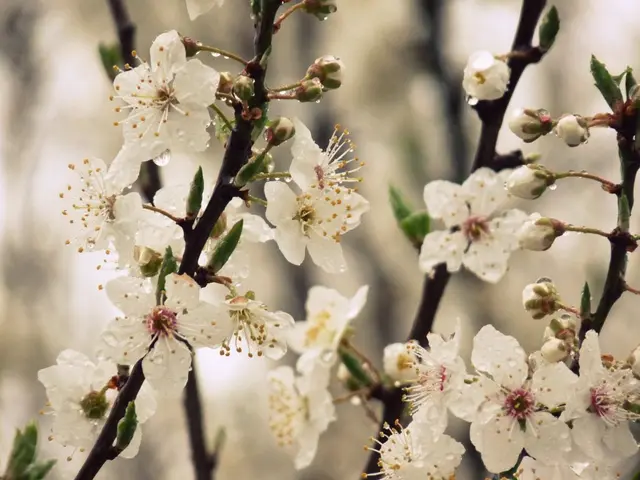
- History: The Ihwamun key tag, translated to "pear blossom pattern," gained popularity during the late Joseon Dynasty. It served not only as a key holder but also as a testament to the woman's role in managing the home and fostering harmony within the household.
- Design: The pear blossom motif is the defining characteristic of the key tag, symbolizing prosperity and a blissful union. As family members and skilled artisans crafted these decorative tags, tenderness and passion were woven into each stitch.
The key tags were traditionally created from silken or cotton fabrics, with jade, mother-of-pearl, and metal pieces added for embellishment. This delicate accessory boasted fine embroidery techniques such as the satin stitch, split stitch, and couching stitch, showcasing naturalistic curves and subtle shading.
- Embroidery: The tag was skillfully crafted with the embroidered fabric carefully shaped, padded, edged with silk cord, and securely attached to the key ring or hook.
- Present-day Significance: This beautiful object served not only as a practical item but also as a status symbol, reflecting a family's care, love, and social standing.
Let's honor the spirit of these exquisite key tags and ensure that their craft and history continue to inspire us. If desired, I can also provide examples of modern craftsmen's interpretations or resources on hanbok accessories, Joseon Dynasty marriage customs, and Korean folk art exhibitions. Cheers to preserving these timeless traditions!
- ** unfolding Histories**: The intricate Ihwamun key tag, a jewel from the late Joseon Dynasty, was not just a symbol of tradition and symbolism but also an embodiment of the evolving roles of women in Korean culture, as they transitioned from managing homes to contributing to the arts.
- ** International Appreciation**: The allure of the Ihwamun key tag transcends borders, captivating audiences worldwide and showcasing Korean cultural travel opportunities, where one can immerse in the rich tapestry of the Joseon era and its artisanship.
- ** Lifestyle Evolution**: Elevate your home-and-garden aesthetic by incorporating elements of the Ihwamun key tag's exquisite design, symbolizing prosperity, harmony, and cultural appreciation in your lifestyle.